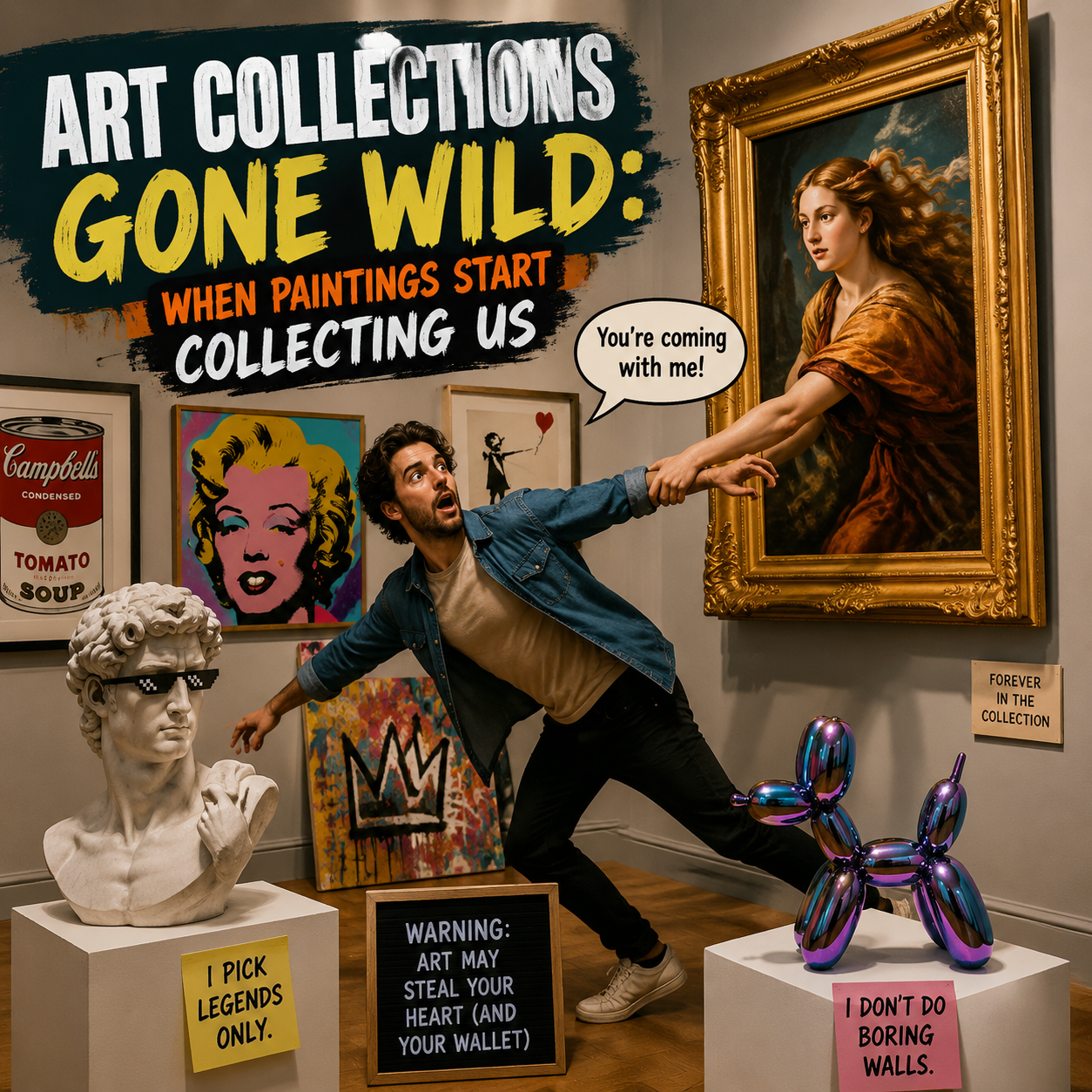
artitudesgallery – Art Collections Gone Wild: When Paintings Start Collecting Us often feels like a playful exaggeration, but it captures something real about how people engage with art in modern times. The way humans gather, curate, and emotionally attach themselves to artworks has changed dramatically over the years, blending culture, identity, and even technology into a single evolving experience.
What Are Art Collections Today?
Art collections today are no longer just walls filled with expensive paintings. They represent identity, lifestyle, and even digital presence. In simple terms, they are curated groups of artworks—paintings, sculptures, digital creations, and mixed media pieces—that reflect the collector’s personality or purpose.
Modern collectors often combine traditional oil painting masterpieces with digital installations, showing how flexible the concept has become. This shift proves that collecting art is no longer limited to wealthy elites but is now accessible to wider audiences.
Who Builds Art Collections?
Art collections are built by a wide range of people, not just museum curators or billionaires. Today, collectors include:
Artists, Curators, Investors
- Independent artists preserving their own work history
- Curators designing thematic exhibitions
- Investors focusing on long-term value growth
- Everyday enthusiasts collecting art for emotional satisfaction
Each group brings a different motivation, shaping the diversity of global art culture.
Where Art Collections Thrive Globally
Art collections thrive in multiple environments, both physical and digital. Major cultural hubs like Paris, New York, and Tokyo host some of the most influential galleries and museums in the world.
Museums, Private Galleries, Online Platforms
- Museums preserve historical and cultural masterpieces
- Private galleries showcase exclusive or emerging artists
- Online platforms allow global access to artworks instantly
This global spread ensures that art is no longer locked in one geographical space but flows freely across borders.
When Did Art Collecting Become Popular?
The history of art collecting dates back to ancient civilizations like Rome and Egypt, where rulers showcased power through artistic possession. However, modern popularity surged during the Renaissance when wealthy patrons began supporting artists like Leonardo da Vinci and Michelangelo.
In the 20th century, art collecting evolved further with the rise of contemporary art movements, making it a mainstream cultural activity rather than a royal privilege.
Why Art Collections Matter in Modern Culture
Art collections matter because they preserve cultural memory, express identity, and support creative industries. They also serve as emotional anchors, connecting people to history and imagination.
Interestingly, a growing number of collectors now treat art as a hybrid between passion and investment. At this point in the discussion, Art Collections become more than just a hobby—they turn into structured cultural ecosystems that influence global trends, pricing markets, and even digital innovation in creative industries.
How to Start Your Own Collection
Starting an art collection doesn’t require massive wealth. It requires curiosity, patience, and a clear sense of direction.
Budgeting and Curation
Begin with a realistic budget and focus on artworks that resonate emotionally. Many beginners start with prints or small original works before moving toward higher-value pieces.
It’s also important to study the artist’s background, medium, and long-term potential. Collecting art is as much about storytelling as it is about ownership.
The Psychology Behind Collecting Art
Humans naturally collect things—it’s a psychological behavior linked to memory, identity, and control. Art collecting specifically activates emotional responses because artworks often represent abstract ideas and personal interpretations.
Psychologists suggest that collecting art can enhance cognitive engagement and emotional well-being. It allows individuals to construct personal narratives through visual expression.
Digital Transformation of Art Collections
The digital era has completely reshaped how people experience art. Virtual galleries, augmented reality exhibitions, and blockchain-based ownership systems are now part of the ecosystem.
NFTs and Virtual Galleries
Non-Fungible Tokens (NFTs) have introduced new ways of owning digital art securely. Meanwhile, virtual galleries allow collectors to display their pieces in immersive 3D environments accessible from anywhere in the world.
This transformation has made art collecting faster, more global, and more experimental than ever before.
The Hidden Value of Art Investment
Art is not just visually appealing—it also holds financial value. Many collectors see artworks as long-term assets that appreciate over time.
However, value depends on multiple factors such as artist reputation, rarity, historical significance, and market demand. Unlike stocks, art carries emotional and cultural weight, making it a unique investment category.
Common Mistakes in Art Collecting
New collectors often make avoidable mistakes such as:
- Buying art based only on trends
- Ignoring authenticity verification
- Overlooking storage and preservation conditions
- Focusing solely on investment returns
Avoiding these mistakes helps build a more meaningful and sustainable collection journey.
Future of Art Collections
The future of art collecting is expected to merge physical and digital worlds even further. Artificial intelligence, immersive environments, and global online marketplaces will redefine how collectors interact with art.
We may soon see hybrid galleries where physical paintings are linked to digital experiences, creating multi-layered storytelling formats for audiences worldwide.
Art collecting is evolving into a multidimensional experience shaped by culture, technology, and human emotion. From ancient civilizations to modern digital platforms, the journey reflects how deeply art is embedded in human identity. Understanding this evolution helps us appreciate not just the artworks themselves but also the stories behind them. Ultimately, Art Collections Gone Wild: When Paintings Start Collecting Us stands as a reminder that art is no longer something we simply observe—it is something that actively shapes who we are.