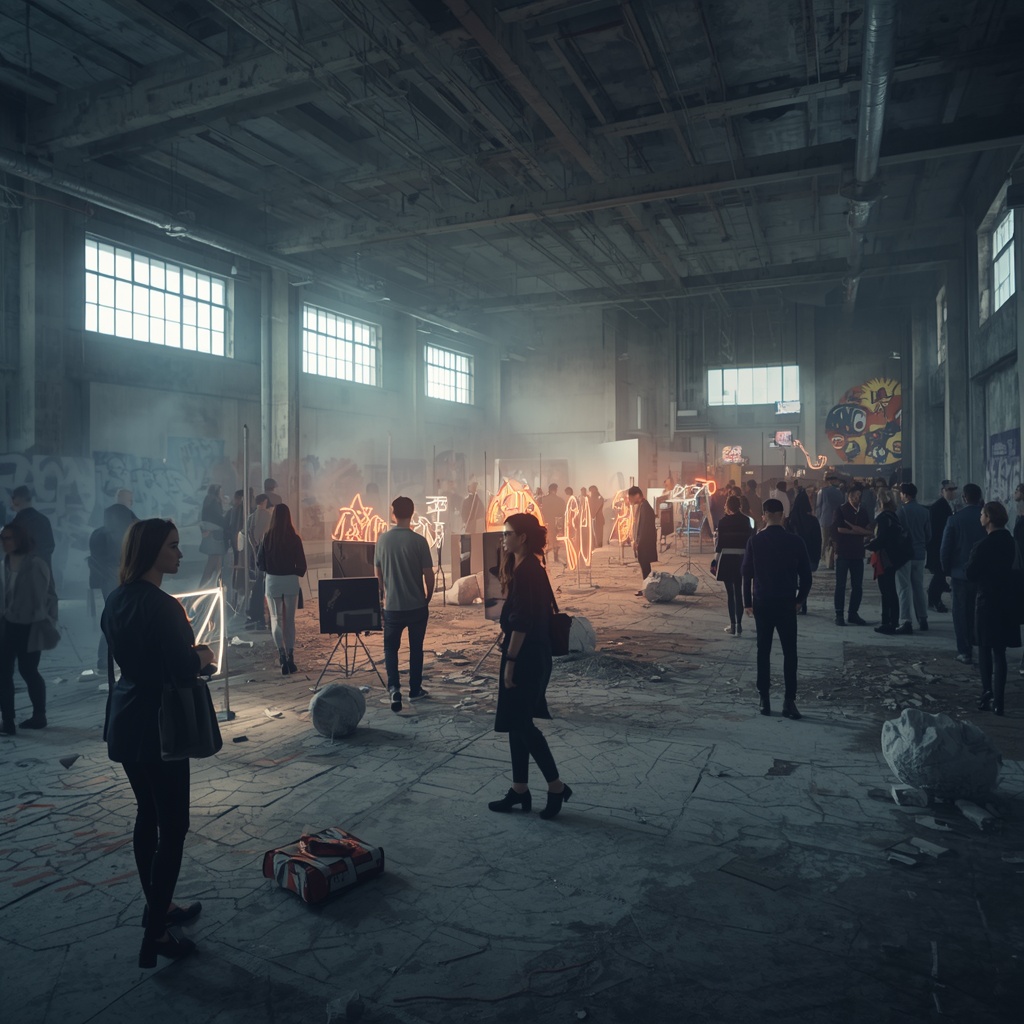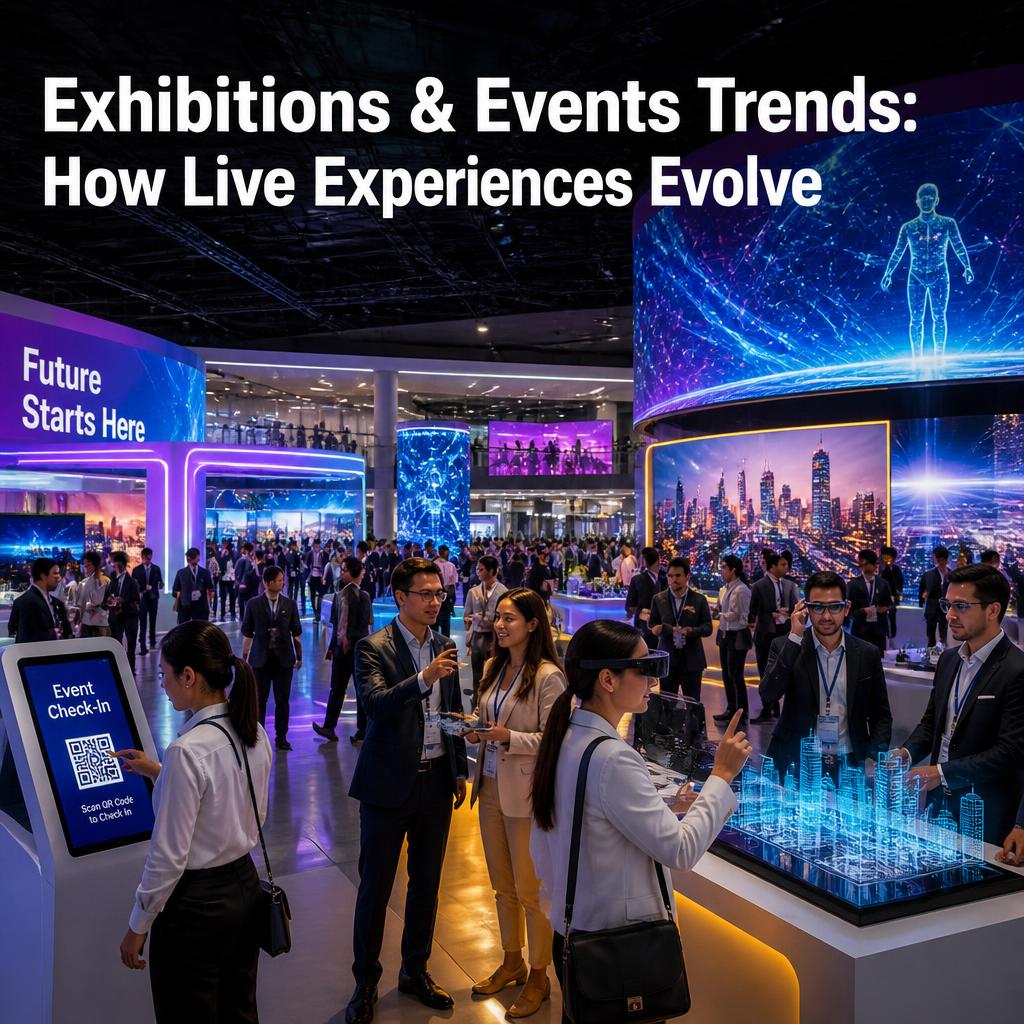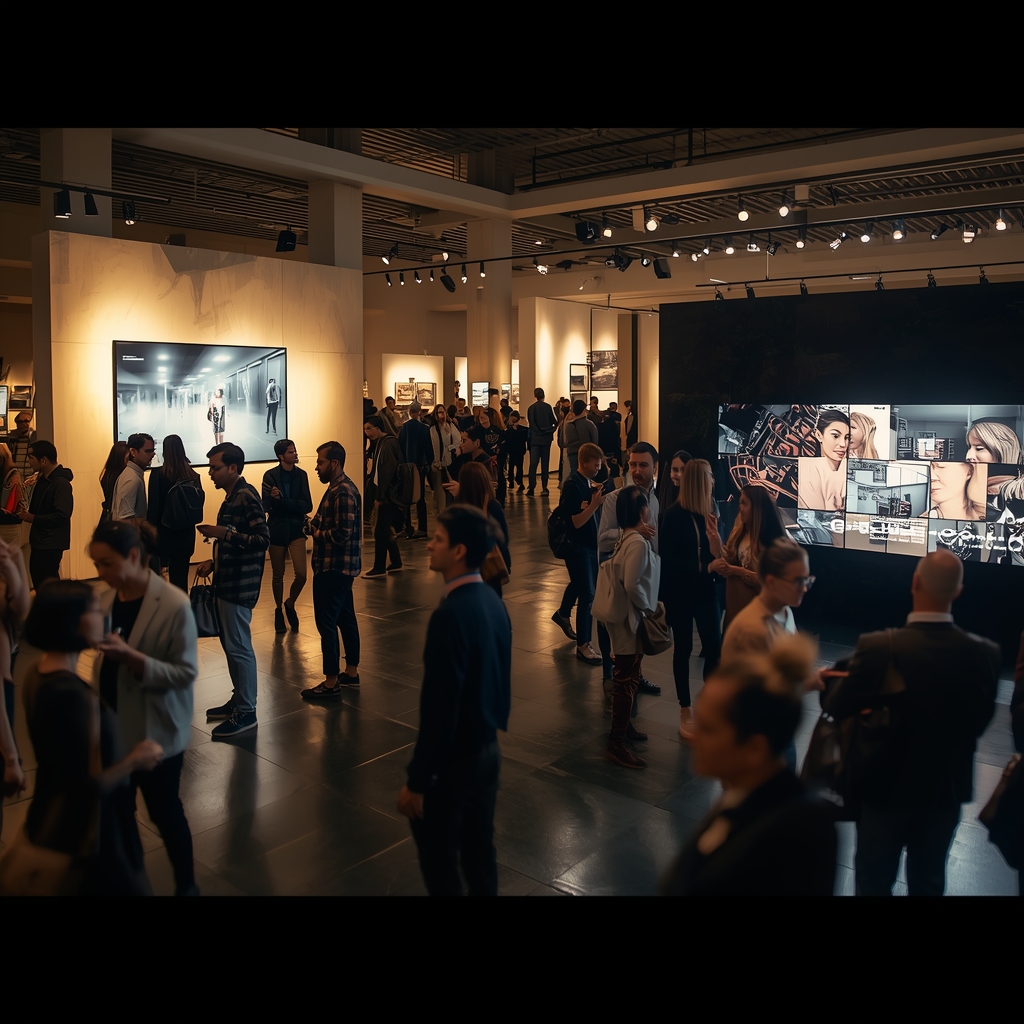
Exhibitions & Events to Increase Brand Awareness have become a practical way for businesses to turn a brand from something people simply recognize online into something they can actually see, experience, and remember. In a crowded market, audiences encounter countless advertisements, posts, emails, and promotional messages every day. A well-designed exhibition or event creates something different: a real interaction between a business and the people it wants to reach.
Whether it is a large trade show, an intimate product launch, a community gathering, or an interactive pop-up, events give brands room to tell their story in a more personal way. The goal is not simply to put a logo on a booth. It is to create an experience that connects the brand with a useful idea, emotion, or memorable moment. – artitudesgallery.com
Why Exhibitions and Events Matter for Brand Awareness
Brand awareness describes how easily people recognize or recall a business, product, or service. In marketing terminology, this process is closely connected with brand recognition, brand recall, and consumer perception.
Digital advertising can introduce a name quickly, but physical experiences engage people through several senses at once. Visitors can see a product, hear its story, speak with company representatives, and sometimes try it immediately.
That combination can create stronger cognitive associations. In simple terms, people have more details available to help them remember the brand later.
This explains why exhibitions remain useful even in a heavily digital business environment. They provide something a banner advertisement cannot fully reproduce: genuine human interaction.
What Makes an Exhibition a Powerful Branding Tool?
A successful exhibition combines visibility, interaction, storytelling, and consistency. Instead of asking visitors to passively consume an advertisement, it gives them something to explore.
Consider a technology company introducing a new application. A standard advertisement might describe its features. At an exhibition, however, visitors can test the software, ask questions, watch demonstrations, and discuss their own problems with specialists.
Suddenly, the brand is no longer an abstract name.
It becomes an experience.
Creating Memorable First Impressions
First impressions matter because exhibition halls are usually busy environments. Visitors may walk past dozens or even hundreds of booths during a single day.
A booth therefore needs an immediate visual identity.
This does not mean filling every available space with oversized logos. Strong exhibition design usually uses a clear visual hierarchy, recognizable brand elements, readable messaging, and enough open space to make the area comfortable.
Colors, typography, lighting, displays, staff clothing, signage, and even furniture can support visual branding.
Turning Passive Visitors Into Active Participants
People remember experiences better when they actively participate.
Instead of simply handing out brochures, brands can create product demonstrations, workshops, interactive screens, games, short consultations, quizzes, or live presentations.
Participation encourages visitors to spend more time with the business. More importantly, it gives the brand an opportunity to start a natural conversation rather than immediately delivering a sales pitch.
Who Should Use Exhibitions and Events?
Exhibitions are not limited to multinational corporations with enormous marketing budgets. Businesses of different sizes can use event marketing when the audience and format match their objectives.
Startups can introduce unfamiliar products and collect early feedback. Established companies can strengthen market visibility or launch new product lines. Service businesses can demonstrate expertise through seminars and consultations, while retailers can create temporary experiences around seasonal campaigns.
Business-to-business companies also benefit because industry exhibitions bring suppliers, decision-makers, distributors, investors, and potential partners into one location.
The key question is not, “Is our company large enough for an exhibition?”
A better question is, “Will the right audience be there?”
Where Should Brands Hold Events for Maximum Visibility?
Location influences both attendance and audience quality.
Large convention centers work well for major industry exhibitions because they already attract professional visitors. Shopping centers can suit consumer-focused activations, while hotels, galleries, restaurants, campuses, outdoor spaces, and temporary pop-up locations can support more specialized experiences.
However, location should always follow audience behavior.
A premium interior brand, for example, might gain more value from a carefully curated design exhibition than from a huge general consumer fair. Meanwhile, a food startup could attract stronger engagement at a culinary festival where visitors already want to discover new flavors.
Match the Venue With Brand Personality
The venue itself communicates something.
A sustainable company could select a space featuring recycled materials, natural lighting, and environmentally conscious operations. A technology business might prefer a contemporary venue equipped with digital installations and high-speed connectivity.
This alignment strengthens brand congruence, a marketing concept describing consistency between different elements of a brand experience.
When Is the Best Time to Organize Brand Events?
Timing can significantly influence results.
Companies often organize events around product launches, anniversaries, seasonal campaigns, industry conferences, or major business milestones. Others participate in annual exhibitions because their target customers already expect to attend.
Preparation should begin well before visitors enter the venue.
Brands need time to establish objectives, design the experience, promote attendance, train staff, prepare content, and organize follow-up activities.
Build Momentum Before Opening Day
An exhibition campaign should not begin when the doors open.
Businesses can create anticipation through social media previews, email invitations, behind-the-scenes content, countdown posts, partner announcements, or early registration campaigns.
This pre-event engagement helps transform an isolated event into a broader marketing campaign.
How to Design an Exhibition That People Remember
Good exhibition design starts with one central idea.
What should visitors remember after leaving?
Trying to communicate ten messages at once often weakens all of them. A focused booth gives people a simple reason to stop and makes the core message easier to understand.
The design should then support that message through visual elements, activities, demonstrations, and conversations.
Use Storytelling Instead of Pure Promotion
People generally connect with stories more easily than lists of features.
Suppose a company sells environmentally friendly packaging. Instead of displaying boxes alongside technical specifications, the exhibition could show the journey of conventional packaging from production to waste and then demonstrate how its alternative changes that journey.
This approach creates context.
It answers what the product does, who benefits from it, where it can be used, when it becomes useful, why the solution matters, and how it works.
That is much more engaging than simply saying, “Our product is better.”
Create Interactive Touchpoints
Interactive elements can dramatically change the atmosphere of a booth.
Visitors might scan a QR code to customize a product, experiment with an augmented reality demonstration, join a quick competition, participate in a workshop, or watch a live production process.
Technologies such as augmented reality, virtual reality, and interactive digital signage can add another dimension when they serve a genuine purpose.
Technology should support the experience rather than becoming a distraction.
Human Interaction Still Matters Most
A beautiful booth can attract attention, but the people working inside it often determine whether visitors leave with a positive impression.
Event staff should understand the brand, products, audience, and key messages. More importantly, they should know how to have comfortable conversations.
Nobody enjoys entering a booth and immediately facing an aggressive sales pitch.
A friendly greeting followed by a simple question such as “What brought you to the event?” can open a much more useful discussion.
That human connection creates interpersonal trust, which plays an important role in how consumers evaluate businesses.
Turn Your Event Into Shareable Content
One exhibition can produce content for weeks or even months.
Brands can record interviews, photograph demonstrations, capture visitor reactions, stream presentations, publish behind-the-scenes clips, and collect insights from speakers or industry professionals.
A single 20-minute presentation could later become several short videos, an article, a newsletter topic, social media posts, and an infographic.
This approach increases the content lifecycle of the event.
Encourage User-Generated Content
Visitors can also become part of the promotional strategy.
Photo zones, creative installations, interactive challenges, branded hashtags, or visually interesting displays encourage people to create their own posts.
The important part is making participation feel natural. Visitors should want to take a photo because the experience is interesting, not because a staff member keeps asking them to promote the company.
Authentic user-generated content can expand event visibility beyond the physical venue.
Combine Offline Events With Digital Marketing
Offline and online marketing should not operate as separate worlds.
Before an event, digital channels can generate registrations and awareness. During it, social platforms can amplify activity in real time. Afterward, email campaigns, videos, articles, and social posts can continue conversations with attendees.
For example, visitors could scan a QR code at the booth to access additional resources. With appropriate consent, interested attendees might subscribe to newsletters or request product information.
This creates an omnichannel marketing experience where multiple touchpoints support one consistent brand story.
Measure More Than Visitor Numbers
A crowded booth looks impressive, but attendance alone does not prove that an event succeeded.
Brands should establish measurable objectives beforehand.
Useful indicators can include qualified leads, product demonstrations completed, newsletter subscriptions, social mentions, content engagement, meeting requests, survey responses, website visits, and post-event inquiries.
For broader awareness campaigns, businesses can also compare brand recall or direct traffic before and after the event.
Focus on Meaningful Engagement
Imagine two exhibition booths.
The first attracts 2,000 visitors who stay for 30 seconds. The second receives 600 visitors, but many spend ten minutes testing products and speaking with specialists.
Which performed better?
The answer depends on the objective. However, meaningful engagement often provides greater long-term value than raw foot traffic.
Follow Up While the Experience Is Still Fresh
One common event marketing mistake happens after the exhibition ends.
Nothing happens.
Business cards remain in a drawer, leads sit inside a spreadsheet, and promising conversations gradually lose momentum.
Follow-up should happen while visitors still remember the interaction.
A personalized email can reference the discussion, provide promised information, answer unanswered questions, or suggest a logical next step. Avoid sending the exact same generic sales message to everyone.
People can usually tell.
Segmenting contacts based on their interests creates a much more relevant experience and continues the relationship naturally.
Small Events Can Create Big Brand Impact
Brands do not always need huge exhibitions.
A carefully planned workshop for 30 relevant guests can generate more meaningful conversations than a massive event attended by thousands of people who have little interest in the product.
Small events also allow businesses to experiment.
They can test presentation formats, collect audience feedback, refine messaging, and learn what types of interaction generate the strongest response before investing in larger campaigns.
This makes event marketing accessible to businesses with different budgets.
Building Long-Term Brand Awareness Through Experiences
Strong branding rarely comes from a single interaction. People usually need repeated exposure before a company becomes familiar.
Events can become part of that long-term journey.
Someone might first notice a brand through social media, encounter it again at an exhibition, watch a product demonstration, subscribe to its content, and finally contact the company several weeks later.
Each interaction reinforces the previous one.
That is why successful event marketing focuses less on creating one spectacular day and more on building a connected series of memorable touchpoints.
Ultimately, Exhibitions & Events to Increase Brand Awareness work best when brands stop treating events as temporary promotional spaces and start viewing them as opportunities to create genuine experiences. A clear message, thoughtful design, useful interaction, strong human communication, digital amplification, and consistent follow-up can turn a simple exhibition into a powerful part of a wider branding strategy.