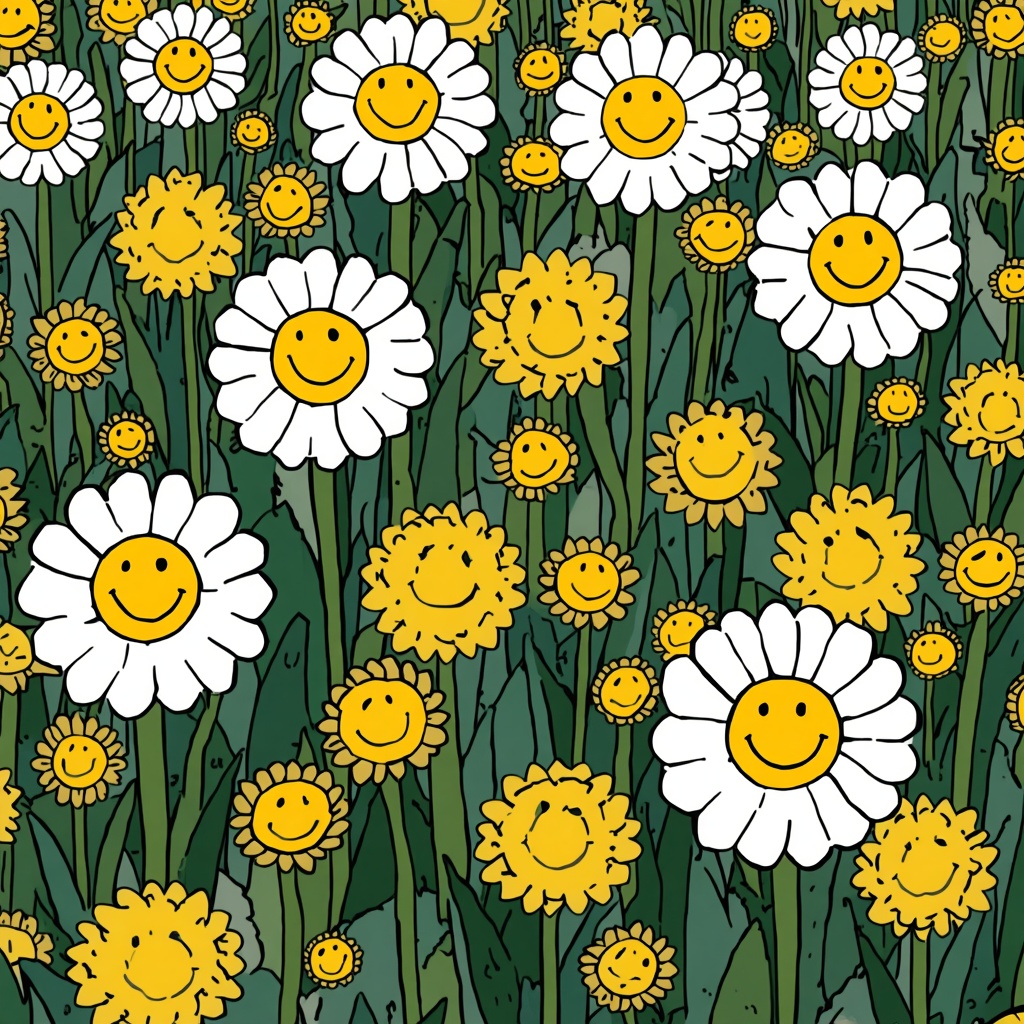
artitudesgallery – Why Murakami’s Smiling Flowers Feel So Happy Yet So Unsettling is a question many art lovers ask the first time they encounter the colorful floral universe created by Takashi Murakami. At first glance, the flowers seem playful, cheerful, and harmless. Their rainbow petals and cartoon-like smiles create an atmosphere that feels innocent and energetic. However, the longer people stare at them, the stranger they begin to feel. Beneath the bright colors lies a deeper emotional tension connected to modern society, consumer culture, postwar trauma, and the psychology of happiness itself.
Murakami’s smiling flowers are not just decorative pop art. They represent a complicated blend of joy, anxiety, fantasy, and emotional escape. That contrast is exactly why these flowers became one of the most recognizable symbols in contemporary art. From luxury fashion collaborations to massive gallery exhibitions, the smiling flowers continue to spark curiosity worldwide.
This article explores what the flowers truly mean, why they became culturally important, and how Murakami transformed a simple smiling face into a global artistic language.
Who Is Takashi Murakami?
The Artist Behind the Smiling Flowers
Takashi Murakami is a Japanese contemporary artist known for blending traditional Japanese art with anime, manga, and commercial pop culture. Born in Tokyo in 1962, Murakami studied nihonga, a traditional Japanese painting style. However, instead of staying inside classical art boundaries, he developed a completely new visual identity that mixed fine art with mass media aesthetics.
His work often looks playful on the surface, but it usually carries darker social commentary underneath. That duality became the foundation of his career.
What Are Murakami’s Smiling Flowers?
A Symbol That Became a Global Icon
Murakami’s smiling flowers are colorful cartoon flowers featuring circular smiling faces in the center. Each flower has vibrant petals arranged around a cheerful expression. Sometimes they appear alone, while other times they fill entire canvases, sculptures, clothing collections, or digital installations.
The flowers became globally famous after Murakami collaborated with Louis Vuitton in the early 2000s. Suddenly, contemporary art merged with luxury street fashion, introducing his floral designs to mainstream audiences.
Today, the smiling flowers appear everywhere:
- Sneakers
- Hoodies
- Posters
- Phone cases
- Designer bags
- Museum exhibitions
- NFTs and digital artwork
Despite their commercial success, the flowers still retain complex artistic meaning.
The Hidden Meaning Behind the Smiles
Happiness That Feels Artificial
One of the most fascinating things about Murakami’s flowers is how their smiles can feel both comforting and disturbing at the same time.
The smiles are perfectly round and repetitive. Every flower appears happy all the time. That constant positivity reflects modern culture’s obsession with appearing cheerful, even when reality feels stressful or emotionally empty.
Murakami uses exaggerated happiness almost like a mask. The flowers suggest that modern people are often expected to smile publicly while privately carrying anxiety, exhaustion, or emotional isolation.
In many ways, the flowers symbolize emotional performance rather than genuine joy.
The Influence of Japanese Postwar Culture
Trauma Hidden Beneath Colorful Art
To fully understand Murakami’s work, it helps to understand postwar Japanese culture.
After World War II, Japan experienced enormous cultural transformation. Economic growth, consumerism, and American influence changed society rapidly. At the same time, collective trauma from war and nuclear destruction remained buried underneath the surface.
Murakami often explores this emotional contradiction through bright and exaggerated imagery. His flowers may look harmless, but they can also represent escapism — a way society hides pain behind cuteness and entertainment.
That emotional layering is part of what makes his art psychologically powerful.
Understanding Murakami’s “Superflat” Theory
Why Everything Looks Cartoonish
Murakami developed an artistic philosophy called Superflat. This theory blends traditional Japanese visual styles with modern anime and consumer culture.
The idea behind Superflat is simple but important:
- High art and commercial art are equal
- Luxury and cheap products can coexist
- Surface beauty often hides emotional depth
- Pop culture reflects social reality
Murakami intentionally creates flat-looking artwork without traditional depth or realism. The smiling flowers fit perfectly within this philosophy because they resemble stickers, emojis, or anime icons rather than classical paintings.
How Superflat Connects to Modern Life
Modern digital culture is also “flat” in many ways. Social media reduces emotions into emojis, filters, and curated identities. Murakami predicted this visual culture long before it became mainstream.
His smiling flowers almost feel like emotional avatars for the internet age.
Why People Feel Emotionally Drawn to the Flowers
The Psychology of Cute Things
Humans naturally respond to round shapes, bright colors, and smiling faces. Murakami intentionally uses these psychological triggers to attract viewers instantly.
However, once people become emotionally comfortable, the repetitive smiles begin creating unease. That emotional shift is intentional.
The flowers create a strange question:
Are they genuinely happy, or are they forcing happiness?
That uncertainty keeps viewers emotionally engaged.
Murakami’s Flowers and Consumer Culture
Art, Branding, and Commercial Success
Murakami openly embraces commercialism instead of rejecting it. Unlike many traditional artists who separate art from business, Murakami treats branding as part of the artwork itself.
His flowers became successful because they function simultaneously as:
- Fine art
- Fashion symbols
- Internet culture
- Luxury branding
- Pop entertainment
This strategy changed the art world dramatically. Murakami proved that an artist could maintain intellectual depth while participating in mass-market culture.
Some critics love this approach. Others argue it makes art too commercial. Either way, the flowers became impossible to ignore.
The Dark Side Hidden Inside the Bright Colors
Anxiety Beneath the Surface
Many viewers notice something unsettling when staring at Murakami’s floral patterns for too long. The endless repetition starts feeling overwhelming instead of comforting.
That effect reflects modern life itself.
People today are surrounded by nonstop stimulation:
- Advertising
- Social media
- Entertainment
- Digital notifications
- Consumer pressure
Murakami’s flower fields mirror this overstimulation. The flowers become symbols of emotional saturation in a hyper-commercialized world.
Why the Flowers Became So Popular Worldwide
Universal Emotional Language
One reason Murakami’s flowers became globally successful is their simplicity. Anyone from any culture can understand a smiling flower instantly.
The imagery crosses language barriers because emotions are universal.
At the same time, the deeper meanings allow serious art collectors and critics to analyze the work intellectually. This rare balance between accessibility and complexity helped Murakami build massive international appeal.
His flowers work equally well in:
- Museums
- Fashion campaigns
- Social media posts
- Collector galleries
- Youth culture
Few contemporary artists achieve that level of versatility.
Murakami’s Influence on Fashion and Streetwear
From Galleries to Global Trends
Murakami helped erase the boundary between contemporary art and fashion culture. His collaborations influenced modern streetwear aesthetics long before artist collaborations became common.
Brands, musicians, and designers embraced his visual style because the flowers represented optimism, rebellion, luxury, and internet-age creativity all at once.
Artists influenced by Murakami can now be seen across modern visual culture, including:
- Designer toys
- NFT projects
- Anime-inspired fashion
- Hypebeast culture
- Pop surrealist artwork
His smiling flowers became more than art. They became a cultural language.
What Murakami’s Flowers Say About Modern Society
The Pressure to Always Look Happy
Perhaps the deepest interpretation of Murakami’s flowers relates to emotional performance in modern life.
Today, many people feel pressure to appear successful, positive, and emotionally stable online. Social media rewards carefully curated happiness while hiding vulnerability.
Murakami’s endlessly smiling flowers reflect this exact condition. Their happiness feels exaggerated because modern public happiness often feels exaggerated too.
The flowers become symbols of emotional contradiction:
people smiling externally while struggling internally.
That emotional honesty hidden beneath colorful surfaces is what gives the artwork lasting relevance.
Why Murakami’s Smiling Flowers Feel So Happy Yet So Unsettling ultimately comes down to contradiction. Takashi Murakami created flowers that appear joyful, innocent, and playful, yet quietly explore anxiety, consumerism, emotional masking, and postwar cultural trauma. Their bright colors attract attention immediately, but their deeper meaning keeps viewers thinking long after the first glance.
Murakami’s smiling flowers are more than cute pop-art symbols. They are reflections of modern life itself — beautiful, overstimulating, emotionally layered, and constantly performing happiness for the world to see.