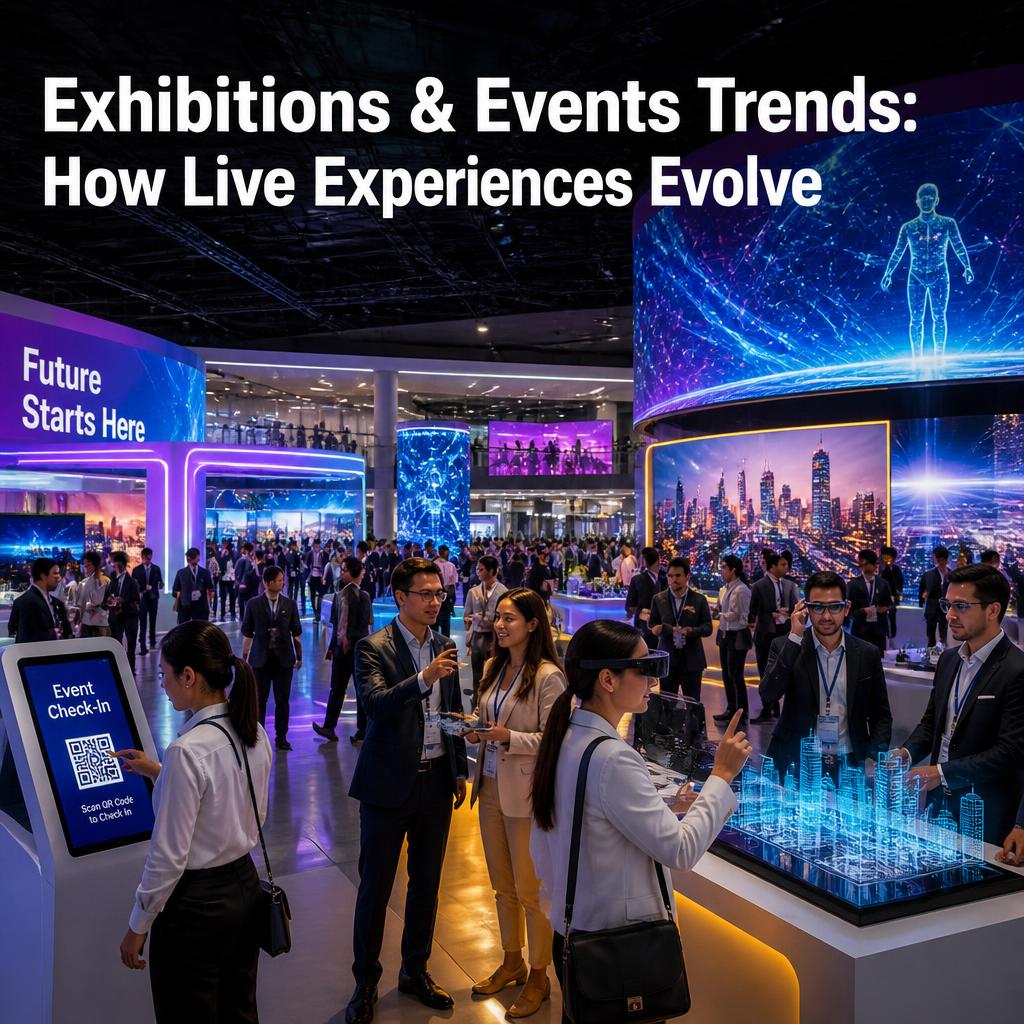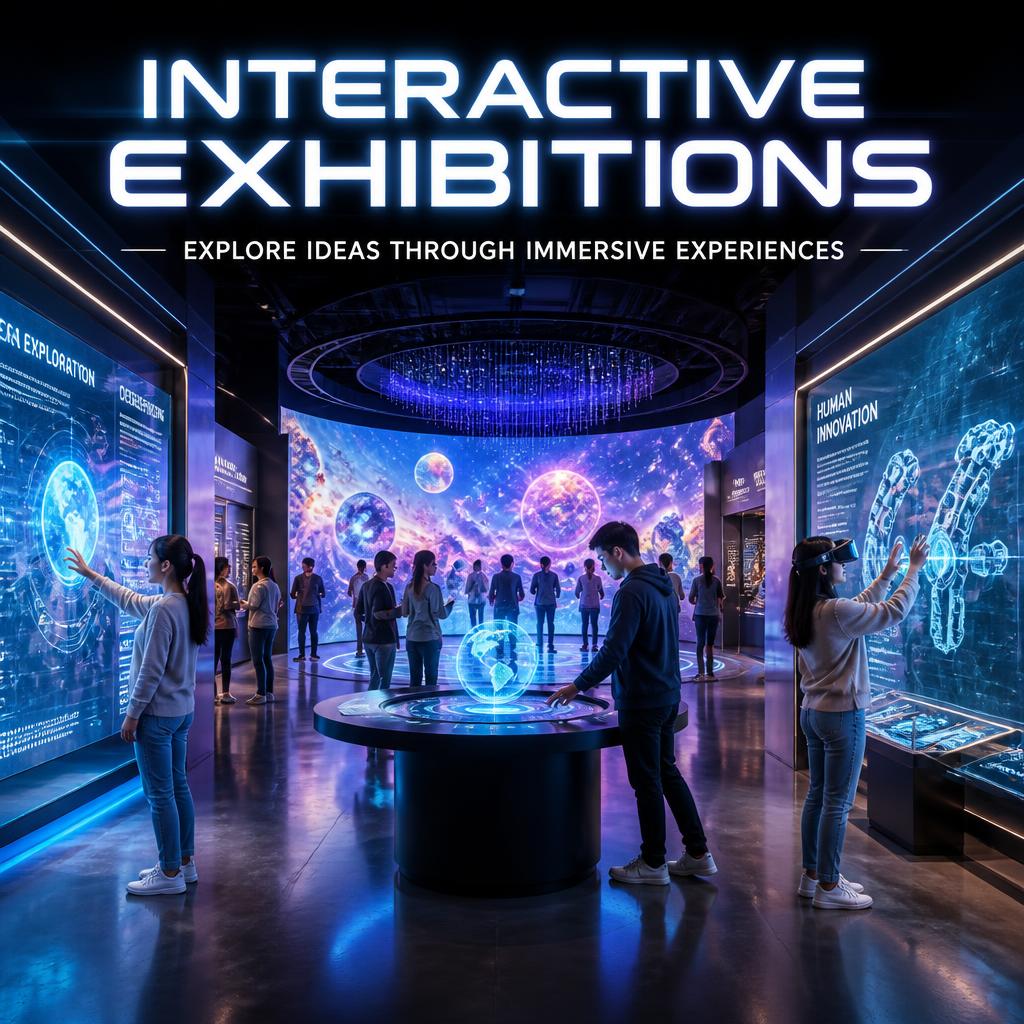
artitudesgallery.com – Interactive Exhibitions: How Immersive Experiences Are Changing the Way We Explore Ideas reflects a major shift in how museums, galleries, cultural venues, and educational spaces connect with modern audiences. Instead of simply looking at objects and reading information panels, visitors can now touch, explore, listen, experiment, and actively participate. This approach turns an ordinary visit into a memorable experience where people become part of the story rather than passive observers.
What Are Interactive Exhibitions?
Interactive exhibitions are environments designed to encourage active visitor participation. They may include simple hands-on displays, responsive installations, digital screens, soundscapes, simulations, or immersive rooms.
Some exhibitions also use advanced technologies such as augmented reality, virtual reality, motion sensors, and projection mapping. However, technology is only useful when it supports a clear purpose. The real goal is to help visitors understand ideas through direct experience.
From Passive Viewing to Active Discovery
Traditional exhibitions usually ask people to observe objects and read descriptions. Interactive spaces create a different rhythm.
Visitors might solve a puzzle, trigger an animation, manipulate a model, or make choices that change what happens next. Because actions produce visible results, learning becomes more personal and engaging.
Why Participation Makes a Difference
Participation creates a stronger connection between visitors and information. When people physically or mentally interact with something, they are more likely to remember it.
A science exhibition, for example, could allow visitors to adjust environmental variables and immediately see how those changes affect a simulated ecosystem. Instead of only reading facts, they discover relationships themselves.
Why Interactive Exhibitions Are Growing in Popularity
Modern audiences interact with responsive technology every day. Smartphones, games, apps, and digital media have changed expectations about how information should feel.
As a result, many cultural institutions now combine traditional displays with participatory experiences.
Memorable Experiences Matter
People may forget a paragraph on an information panel, but they often remember doing something unusual.
Perhaps they entered a room filled with moving projections, reconstructed an ancient object digitally, or heard a historical story change according to their decisions.
These experiences connect information with emotion, movement, and curiosity. That combination can make learning feel natural rather than forced.
Exhibitions Can Become Social Spaces
Interactive installations also encourage conversation. Families solve challenges together, friends compare results, and children share discoveries with adults.
In this way, an exhibition becomes more than a collection of displays. It becomes a shared social experience where visitors learn from both the content and one another.
Where Interactive Exhibitions Are Used
Interactive exhibitions appear in museums, science centers, galleries, historical sites, visitor attractions, trade shows, and temporary pop-up events.
Each setting uses participation differently depending on its audience and purpose.
Museums and Cultural Institutions
Museums often use interactive elements to explain subjects that might otherwise feel distant.
For example, a historical exhibition could combine authentic artifacts with an interactive map showing how a city changed over several centuries. Visitors could select different periods and instantly compare architecture, population, and social development.
The digital layer does not replace genuine artifacts. Instead, it adds useful context.
Science and Educational Spaces
Science centers are ideal environments for hands-on learning.
Visitors can experiment with gravity, electricity, sound, engineering, biology, or environmental systems. They perform an action, observe the result, and adjust their understanding.
This learning-by-doing approach makes complicated concepts easier to grasp.
How Technology Creates Immersive Experiences
Modern technology allows exhibition designers to build environments that respond directly to visitors.
However, successful installations should feel intuitive. A complicated touchscreen or impressive digital wall adds little value if people cannot understand what to do.
Augmented and Virtual Reality
Augmented reality can place digital information over physical objects. Visitors might point a device at an archaeological model and see how buildings may have looked centuries ago.
Meanwhile, virtual reality can transport people into environments that are difficult or impossible to visit physically, such as deep space, ancient cities, or underwater landscapes.
Projection Mapping Transforms Spaces
Projection mapping turns ordinary walls, floors, and structures into dynamic visual environments.
A simple room can become an ocean, historical landscape, or moving artistic world. Because projections can surround visitors, they create immersion without requiring everyone to wear a headset.
Why Storytelling Matters More Than Technology
Technology attracts attention, but storytelling gives an exhibition meaning.
Without a clear narrative, digital features can feel like unrelated entertainment. Visitors may enjoy pressing buttons without understanding the larger message.
Every interaction should therefore answer an important question: why should visitors do this?
Perhaps the activity explains how something works, reveals different perspectives, or encourages people to consider a difficult decision.
Creating Emotional Connections
Facts provide information, while stories help people understand why those facts matter.
An exhibition about migration, for example, could combine statistics with personal recordings, photographs, maps, and individual journeys. Visitors then connect large historical patterns with real human experiences.
That emotional connection often makes information more memorable.
Designing for Different Visitors
Not everyone explores an exhibition in the same way.
Some people enjoy detailed explanations, while others prefer visual discovery. Children may learn through physical play, whereas adults might spend longer exploring historical context.
Good exhibition design offers several ways to participate.
Accessibility Should Come First
Accessibility should be considered from the beginning.
Designers need to think about wheelchair access, readable typography, captions, audio alternatives, tactile information, screen height, language options, sensory sensitivity, and clear navigation.
Keep Interactive Interfaces Simple
Visitors usually encounter exhibition technology without training.
Therefore, instructions should be immediately understandable. Clear symbols, simple prompts, and fast feedback help people focus on the experience rather than struggle with controls.
Who Creates Interactive Exhibitions?
Creating an interactive exhibition usually requires a multidisciplinary team.
Curators and researchers ensure accuracy, while writers shape the narrative. Designers organize the visitor journey, and programmers, animators, sound specialists, fabricators, and accessibility experts develop individual components.
Strong collaboration ensures that content, technology, and physical design work together naturally.
Common Challenges in Interactive Exhibition Design
Interactive experiences must survive thousands of visitors, so durability matters.
Touchscreens, buttons, sensors, and physical components need regular maintenance. Designers must also consider budgets, visitor flow, software reliability, and long-term technical support.
Another challenge is overstimulation.
If every wall flashes and every station demands attention, visitors can quickly become tired. Successful exhibitions balance energetic interactive areas with quieter spaces for reading, observing, and reflection.
The Future of Interactive Exhibitions
Future exhibitions may become increasingly responsive and personalized. Artificial intelligence, spatial computing, advanced sensors, and adaptive digital content could create experiences that respond differently to each visitor.
Still, technology alone will never guarantee a meaningful experience.
Strong ideas, accessible design, emotional storytelling, and purposeful participation will remain essential. Ultimately, Interactive Exhibitions: How Immersive Experiences Are Changing the Way We Explore Ideas shows how thoughtfully designed spaces can transform visitors from passive spectators into active explorers, creating experiences they understand, remember, discuss, and genuinely enjoy.